A very large part of our work is something the client never sees.


May 21, 2026
A very large part of our work is something the client never sees.
And, when the process is well managed, that is exactly how it should be.
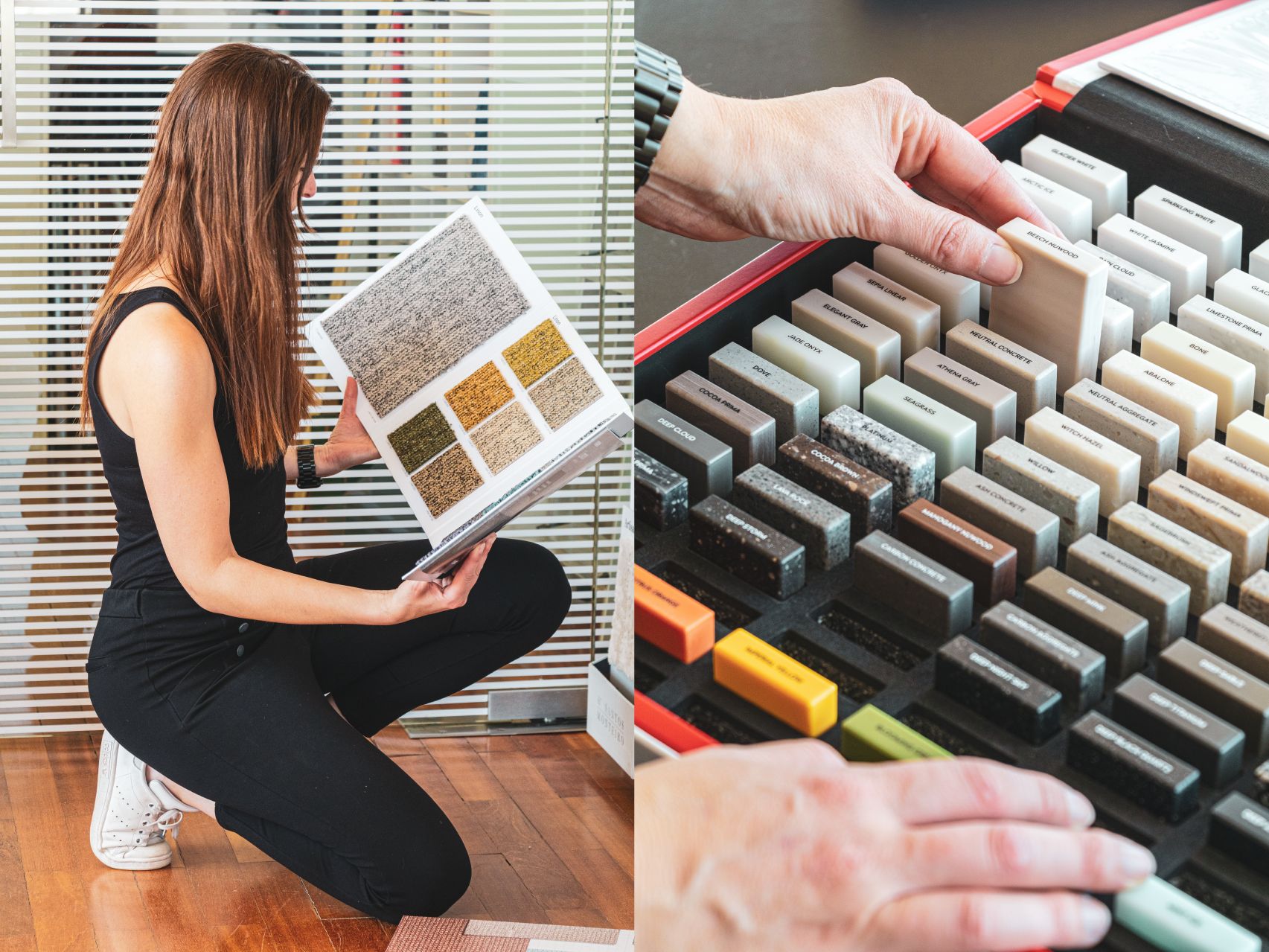
They do not see every conversation with suppliers, every alternative considered before a solution is presented, every piece rejected because it does not meet the right standard, every timeline adjusted, every team coordinated, or every small issue resolved before it becomes an urgent decision. They do not see it because that is precisely one of the responsibilities of a turnkey project: to filter, protect and simplify.
For a long time, luxury was spoken about as something visible. Beautiful materials, special pieces, impeccable finishes, highly photogenic spaces. All of that still matters. But there is another form of luxury, quieter perhaps, that feels increasingly relevant to me: the luxury of not having to be constantly available to solve, confirm, insist, decide or correct.
In an interiors project, the final simplicity rarely comes from a simple process. Behind a home that feels natural, coherent and ready to be lived in, there is rigorous management. There is supplier curation, material selection, and a constant reading between what was designed and what is being executed. There are decisions that need to be made with precision, because every choice affects another. A texture affects a light. A timeline affects an installation. A bespoke piece affects the way the entire space is perceived.
This is where trust is built. Not only during the creative phase, but through the ability to guide the process without creating noise for the client.
For me, working well does not mean involving the client in every problem. It means involving them in the decisions that truly matter. It means knowing when they should be called in, and when they should be spared. It means anticipating scenarios, finding solutions, validating options and making sure the path towards the final result does not become heavier than it needs to be.
Supplier curation has a great deal to do with this. We do not simply choose who can execute. We choose who understands the level of detail, who respects the intention, who knows how to work with time, precision and responsibility. There are teams and artisans with whom a relationship of trust is built over the years, because they understand that a piece is never just a piece. It is part of a language. It must fulfil a function, but it must also respect an atmosphere.
The client may not see this network. They may not follow every phone call, every site visit, every adjustment. But they feel the result of that structure when they enter the space and everything seems to be exactly where it belongs.
And perhaps this is what interests me most in interior design today: the idea that luxury can also be a form of lightness. A well-managed project. A carefully filtered process. A delivery without unnecessary friction. A home that does not carry, in its final result, the weight of everything that had to be solved along the way.
Because in the end, what should remain is not the memory of the effort.
It should be the feeling that everything was considered.
Even what was never seen.